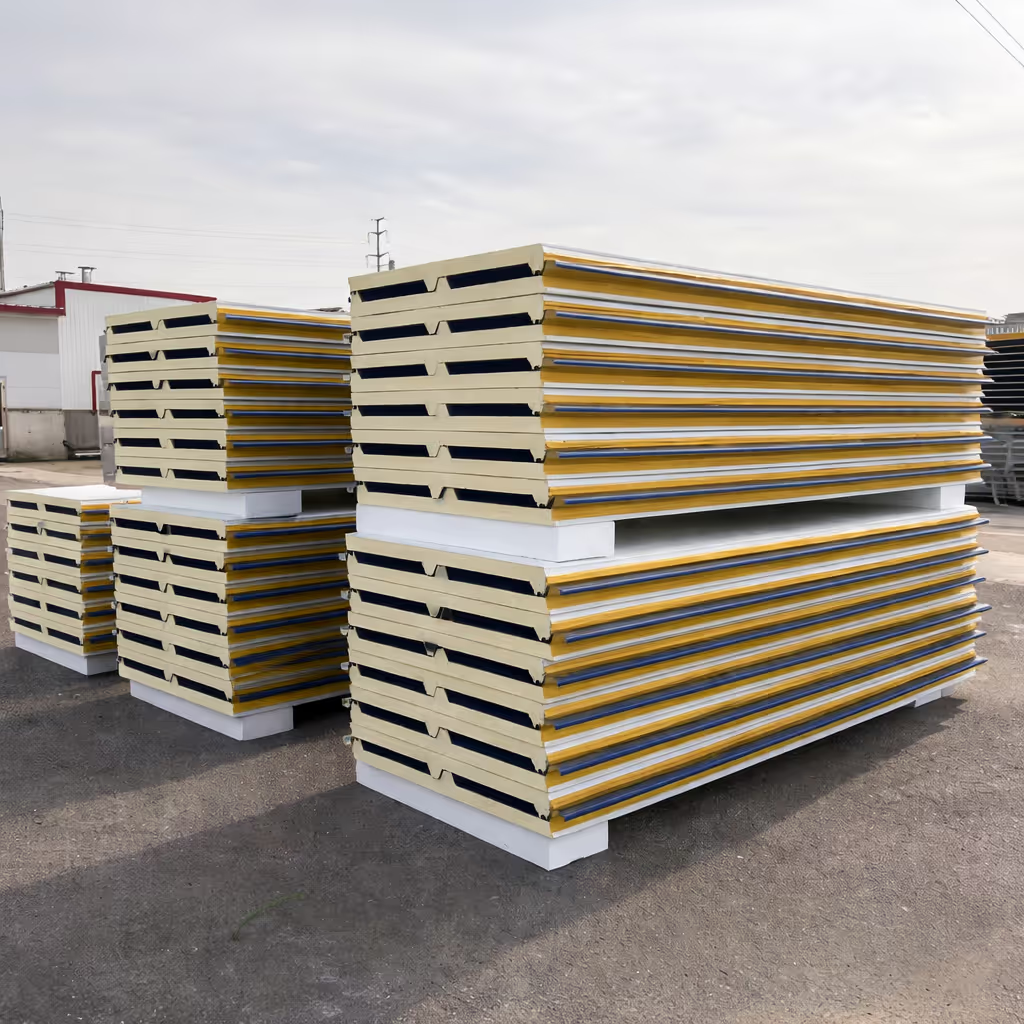
Can you match a panel already specified on my drawings?Usually. Send us the specification and we will tell you whether we can supply that exact line, or what the closest equivalent is across the five we run and where it differs. If a specified panel genuinely is the right one, we will say so.
Does sourcing locally actually change the schedule?Yes, measurably. Freight from a Fort Worth or Lewisville plant is a different proposition from freight across several states, and being able to visit the factory matters when something has to be resolved quickly.
Do you sell panels without installation?Yes. Most customers want the panels, doors, coving, and refrigeration handled as one scope by one crew, which is how we are set up — but we will supply panels alone if you have your own installer.
Which line is the least expensive?It depends entirely on thickness, finish, and quantity, and the cheapest panel is not always the cheapest building. We will show you the comparison on your actual job rather than quoting a headline price that changes once the real spec lands.